


2026-08-07T04:37:35
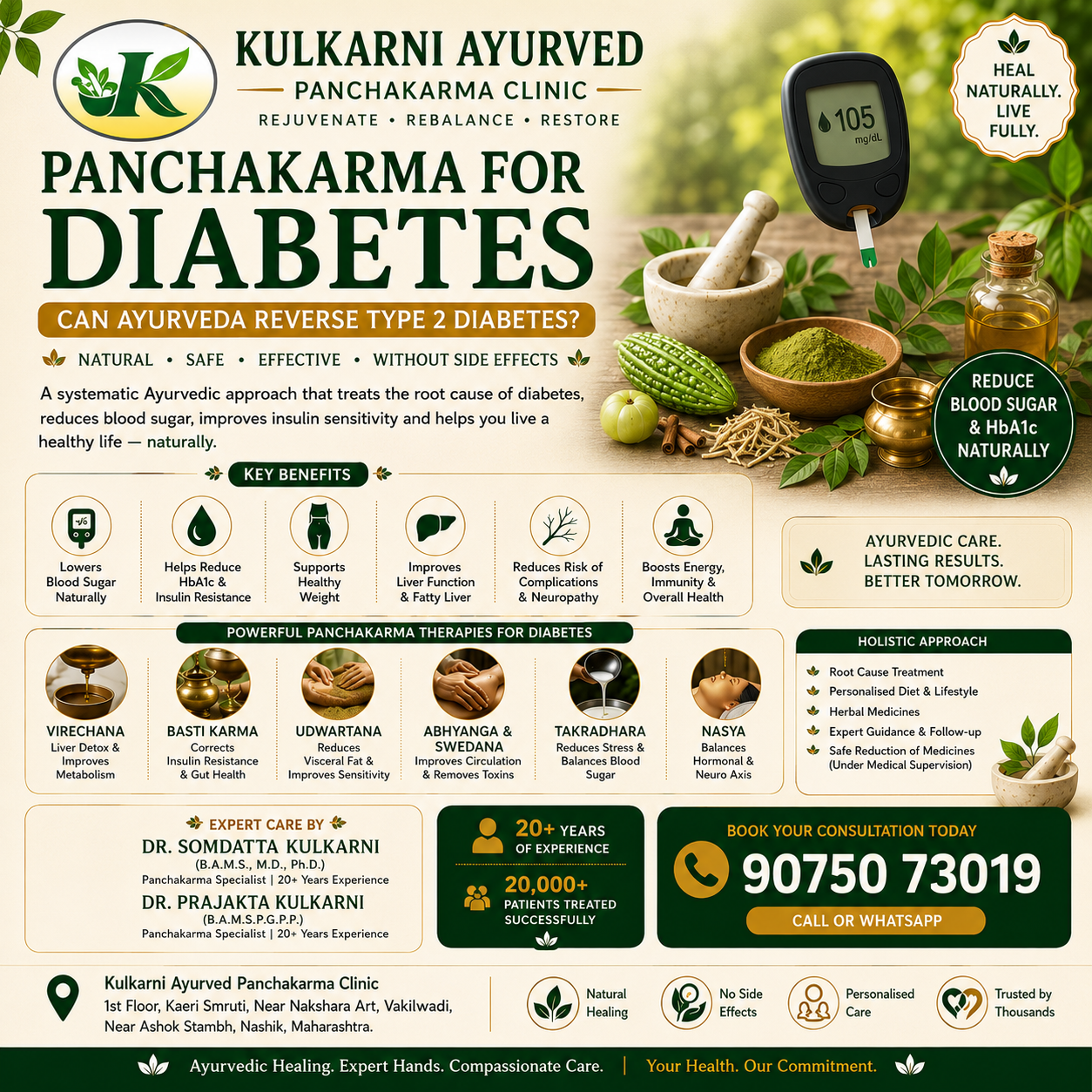
Can Panchakarma reverse Type 2 diabetes naturally? Dr. Somdatta & Dr. Prajakta Kulkarni explain how Ayurvedic treatment reduces blood sugar, HbA1c & insulin resistance — without side effects. Best Panchakarma centre in Nashik. 08047149231 India is the diabetes capital of the world. Over 100 million Indians are living with Type 2 diabetes today — and millions more have pre-diabetes without knowing it. At KULKARNI AYURVED PANCHAKARMA CLINIC, Nashik, diabetes patients walk through our door every week, most of them carrying the same fear: 'Will I be on these tablets forever? Is there anything that can actually reverse this?' The honest answer is: for many patients — especially those with Type 2 diabetes in early to moderate stages — yes, significant reversal is possible. Not through fasting, not through surgery, not through a magic pill — but through a systematic Ayurvedic approach that treats the root cause of diabetes, not just the number on your glucometer. Ayurveda has understood this disease — called Madhumeha — for over 5, 000 years. The classical texts describe it in remarkable detail: its causes, its progression through multiple stages, and its complete therapeutic management. In this blog, we share exactly what that management looks like in clinical practice at KULKARNI AYURVED PANCHAKARMA CLINIC, Nashik — and what you can realistically expect. In This Article 1. What Is Type 2 Diabetes — and Why Is India So Affected? 2. How Ayurveda Understands Diabetes — Madhumeha and Its Root Cause 3. The 20 Types of Prameha — Ayurveda's Diabetes Classification 4. Why Standard Diabetes Medicines Are Not Enough 5. Panchakarma Treatments for Diabetes — All Options Explained 6. The Complete Ayurvedic Diabetes Treatment Protocol 7. Pre-Diabetes — The Most Important Time to Intervene 8. Diabetes and Its Complications — How Panchakarma Helps 9. The Ayurvedic Diet for Diabetes 10. Exercise and Lifestyle — the Ayurvedic Approach 11. What Results Can You Realistically Expect? 12. Why Choose KULKARNI AYURVED PANCHAKARMA CLINIC, Nashik? 13. Frequently Asked Questions 1. What Is Type 2 Diabetes — and Why Is India So Affected? Type 2 diabetes is a metabolic disorder in which the body either does not produce enough insulin or does not respond to insulin effectively — a condition called insulin resistance. As a result, glucose cannot enter the cells where it is needed for energy. Instead, it accumulates in the bloodstream, causing chronically elevated blood sugar that damages virtually every organ in the body over time. Unlike Type 1 diabetes (where the pancreas completely fails to produce insulin), Type 2 diabetes develops gradually — driven by lifestyle factors over months and years before it is diagnosed. This is both its danger (it is often silent until significant damage has occurred) and its opportunity (it can be significantly reversed when caught and treated appropriately). India is disproportionately affected because of several factors: • Indians have a genetic predisposition to insulin resistance — at the same BMI, Indians have significantly more abdominal visceral fat than Europeans, which is the key driver of insulin resistance • The traditional Indian diet is carbohydrate-dominant — rice, wheat, and sweetened foods form the bulk of meals • Rapid urbanisation and sedentary lifestyles have dramatically reduced physical activity in a single generation • Chronic stress — particularly in urban and semi-urban professionals — elevates cortisol, which directly worsens insulin resistance • Stress-related sleep disorders further impair glucose metabolism Understanding these root causes is exactly where Ayurveda begins — and it is why Ayurvedic treatment, when properly conducted, is able to reverse conditions that standard medication can only manage. 📞 Diagnosed with diabetes or pre-diabetes? Call 08047149231 at KULKARNI AYURVED PANCHAKARMA CLINIC, Nashik for a complete Ayurvedic assessment. ──────────────────────────────────────────────────────────────────────── 2. How Ayurveda Understands Diabetes — Madhumeha and Its Root Cause In Ayurveda, the closest equivalent to Type 2 diabetes is Madhumeha — literally, 'honey-urine disease, ' named for the sweet taste of the urine in uncontrolled diabetes. It falls under a larger category of urinary disorders called Prameha (20 types described in classical texts). Ayurveda identifies Madhumeha as primarily a disorder of Kapha dosha combined with severely weakened Agni (metabolic fire). Here is exactly what happens from an Ayurvedic perspective — and how it maps precisely onto modern medicine's understanding: Ayurvedic Understanding and Modern Medical Equivalent 1. Mandagni — weakened digestive and metabolic fire which is explained in modern science as Impaired glucose metabolism and reduced mitochondrial function in cells 2. Ama accumulation — unprocessed metabolic waste in tissues, Visceral fat accumulation, inflammatory cytokines, oxidative stress 3. Kapha obstructing the channels (Srotas) - Insulin resistance — insulin cannot enter the cells effectively 4. Meda dhatu dushti — fat tissue disorder | Adipose tissue dysfunction — fat cells secreting inflammatory adipokines 5. Kleda (excess fluids and mucous) in channels - Excess glucose circulating in the bloodstream (hyperglycaemia) 6. Ojas depletion — loss of fundamental vitality | Declining beta-cell function — the pancreas gradually loses insulin-producing capacity 'Nidanarthakara Prameha — The cause of Prameha is the accumulation of Kapha and Meda (fat) in the channels of the body, leading to obstruction of Agni.' — Charaka Samhita, Chikitsa Sthana What this means practically: Diabetes in Ayurveda is not just a blood sugar problem. It is a whole-body metabolic crisis — involving the digestive system, the fat tissue, the liver, the kidneys, the nervous system, and the immune system simultaneously. Treating only the blood sugar number (as most diabetes medications do) is like mopping the floor while the tap is still running. Panchakarma turns off the tap. ───────────────────────────────────────── 3. The 20 Types of Prameha — Ayurveda's Diabetes Classification One of the most remarkable aspects of Ayurveda's understanding of diabetes is that Charaka Samhita described 20 distinct types of Prameha — 4 types caused by Vata, 6 by Pitta, and 10 by Kapha. Each has specific clinical features, specific treatment, and a specific prognosis. Of these 20, Madhumeha (Type 2 diabetes) is considered the most serious Prameha — a Vata-type disorder that develops when earlier Kapha-Pitta Pramehas are not treated. This progression corresponds exactly to modern medicine's understanding that Type 2 diabetes typically follows years of metabolic syndrome, insulin resistance, and pre-diabetic states. Why does this classification matter for your treatment? Because two patients with the same HbA1c may have completely different doshic profiles, complications, and root causes — and therefore need completely different Panchakarma protocols. At KULKARNI AYURVED PANCHAKARMA CLINIC, Nashik, our doctor assesses which type of Prameha you have before designing your treatment. This is what makes Ayurvedic treatment so individually precise. ─────────────────────────────────────────4. Why Standard Diabetes Medicines Are Not Enough We say this with full respect for modern medicine — which has saved countless lives and whose role in managing acute diabetes complications is irreplaceable. But for the vast majority of Type 2 diabetes patients, standard diabetes management has significant limitations that every patient deserves to understand: What Standard Diabetes Medicines DO | What They Do NOT Do Lower blood glucose by various mechanisms (Metformin, Sulphonylureas, DPP-4 inhibitors etc.) | Reverse the underlying insulin resistance that caused diabetes +----------------------------------------+----------------------------------------+ Prevent short-term hyperglycaemic episodes | Halt the progressive loss of beta-cell function over time +----------------------------------------+----------------------------------------+ Reduce HbA1c within 1 to 3 months | Address the metabolic syndrome, fatty liver, and gut dysbiosis driving the disease +----------------------------------------+----------------------------------------+ Manage the disease effectively — often for many years | Cure or reverse the condition; most patients require increasing doses over time +----------------------------------------+----------------------------------------+ Prevent acute complications effectively | Reliably prevent the long-term microvascular complications of neuropathy, nephropathy, retinopathy +----------------------------------------+----------------------------------------+ The progressive nature of standard diabetes management means most patients start on one medicine, then two, then insulin — as the disease advances despite medication. This is not a failure of the medicines. It is a failure to treat the root cause — the Mandagni, the Ama, the Kapha obstruction, the insulin resistance at the cellular level. Panchakarma addresses all of these simultaneously. 📞 On diabetes medication and looking for a more complete solution? Call 08047149231 at KULKARNI AYURVED PANCHAKARMA CLINIC, Nashik. ───────────────────────────────────────── 5. Panchakarma Treatments for Diabetes — All Options Explained A Panchakarma programme for diabetes at KULKARNI AYURVED PANCHAKARMA CLINIC, Nashik uses a carefully designed combination of therapies, each targeting a specific aspect of the diabetic metabolic chain. Here is a complete explanation: ⭐ Virechana — The Primary Treatment for Madhumeha Medicated purgation therapy is the single most important Panchakarma treatment for Type 2 diabetes — and this is consistent with both classical Ayurvedic texts and our clinical experience at KULKARNI AYURVED PANCHAKARMA CLINIC, Nashik. The liver is the primary metabolic regulator for blood glucose. It controls gluconeogenesis (production of glucose from non-sugar sources), glycogen storage, and insulin sensitivity at the hepatic level. In Type 2 diabetes, the liver is almost always congested with Ama and Pitta toxins — it is frequently fatty (NAFLD) and metabolically dysfunctional. Virechana deeply cleanses the liver and the small intestine, removing the metabolic toxins that impair insulin signalling, restoring normal hepatic glucose metabolism, and creating the metabolic conditions in which blood sugar can normalise. Research published in Ayurvedic clinical journals consistently shows significant reduction in fasting blood sugar, post-prandial blood sugar, and HbA1c levels 6 to 8 weeks after a properly conducted Virechana programme. ⭐ Lekhana Basti — Insulin Resistance Correction A specialised Basti (medicated enema) using dry, digestive, Kapha-scraping herbal preparations. This is the most important systemic Panchakarma treatment for correcting insulin resistance. Lekhana Basti removes the accumulated Kapha and Ama from the colon and deep metabolic tissues — the physical equivalent of clearing the cellular blockage that prevents insulin from entering the cells. After a course of Lekhana Basti, the cells become significantly more responsive to insulin — and blood sugar begins to fall even before dietary changes are fully implemented. Udwartana — Metabolic Stimulation and Visceral Fat Reduction Deep herbal powder massage using dry, stimulating, Kapha-reducing herbs. Breaks down the visceral and subcutaneous fat deposits that are the primary driver of insulin resistance in Indian diabetic patients. Improves peripheral insulin sensitivity by stimulating glucose uptake in muscle tissue. Reduces the adipose tissue inflammation that perpetuates the diabetic metabolic cycle. Most diabetes patients who have failed to lose weight on diet and medication alone begin losing abdominal fat measurably during their Udwartana course. Snehana / Abhyanga — Full-Body Warm Medicated Oil Massage Full-body warm medicated oil massage applied to the entire body before every session as Purvakarma. In diabetes, Abhyanga with specific medicated oils is carefully chosen — excessive oil-based treatment can worsen Kapha in some diabetic patients. Our doctors select the appropriate oil and duration based on your individual assessment, using drier, more stimulating oils for high Kapha diabetic patients and nourishing oils for thin, Vata-dominant diabetes patients. Swedana — Full-Body Medicated Steam Full-body medicated herbal steam for the whole body. Opens the skin channels, promotes sweating, eliminates water-soluble metabolic toxins, and significantly improves peripheral circulation — addressing the circulatory impairment that drives diabetic complications in the legs, feet, and kidneys. Regular Swedana also reduces insulin resistance by improving cellular heat shock protein responses. Takradhara — For Stress-Related Diabetes Medicated buttermilk flow on the forehead. Chronic stress is now recognised as a major driver of Type 2 diabetes through cortisol-mediated insulin resistance and gluconeogenesis. Takradhara powerfully reduces cortisol and calms the stress-glucose axis — essential for the large proportion of urban diabetic patients in Nashik whose diabetes is significantly stress-driven. Nasya — For Neurological and Pancreatic Axis Medicated nasal drops. The hypothalamus and pituitary regulate not just thyroid and reproductive hormones but also the autonomic nervous system control of pancreatic insulin secretion. Nasya, by influencing the hypothalamic-pituitary axis through the nasal route, helps restore the normal neurological regulation of insulin secretion and sensitivity. 📞 Want a personalised Panchakarma protocol for your diabetes? Call 08047149231 at KULKARNI AYURVED PANCHAKARMA CLINIC, Nashik. ─────────────────────────────────────────6. The Complete Ayurvedic Diabetes Treatment Protocol Here is how a complete Panchakarma diabetes programme is structured at KULKARNI AYURVED PANCHAKARMA CLINIC, Nashik: Step 1: Detailed Consultation and Metabolic Assessment Your doctor reviews your complete history — duration of diabetes, current HbA1c and fasting/PP blood sugar, current medicines (including doses), any complications present (neuropathy, nephropathy, retinopathy, cardiovascular), fatty liver assessment, weight and BMI, kidney function reports, and any other relevant investigations. Nadi Pariksha (pulse diagnosis) determines the specific doshic profile of your diabetes. A completely personalised treatment plan is then designed — never a generic protocol. ⚠️ Important: Always consult a qualified Ayurvedacharya before starting Panchakarma. At KULKARNI AYURVED PANCHAKARMA CLINIC, Nashik, every patient undergoes a thorough medical assessment — including Nadi Pariksha (pulse diagnosis) — before any treatment begins. Your safety is our first priority. Step 2: Purvakarma — Preparation Phase (Days 1 to 5) Full-body Snehana (warm medicated oil massage to the entire body — with specific oils for diabetic patients) and full-body Swedana (medicated herbal steam for the whole body). Internal medicated ghee preparations are given carefully and specifically — as internal oleation in diabetes requires specific formulations that support metabolism without worsening Kapha. This phase mobilises Ama from the fat tissue, liver, and gut where diabetic toxins are concentrated. Step 3: Pradhanakarma — Main Panchakarma Phase (Days 5 to 21) • Virechana — the primary and most important treatment; performed on the appropriate day after thorough preparation • Lekhana Basti course — a course of Yoga Basti or Kala Basti using Lekhana (scraping, fat-reducing) preparations to correct insulin resistance • Daily Udwartana — metabolic stimulation and visceral fat reduction • Takradhara or Shirodhara — stress-glucose axis correction; type determined by individual assessment • Nasya — hypothalamic-pituitary-pancreatic axis regulation • Herbal medicines — prescribed after thorough examination of the patient; continued until desired blood sugar and HbA1c results are achieved Step 4: Paschatkarma — Post-Treatment Plan A detailed, diabetes-specific Ayurvedic diet plan, herbal medicines to be continued until target blood sugar results are achieved, specific exercise recommendations (walking protocol, yoga), blood sugar monitoring frequency, and a clear lifestyle routine (Dinacharya). Follow-up consultations at 30 days, 90 days, and 6 months — with repeat blood reports to objectively track and demonstrate improvement. Our doctors provide guidance on working with your physician for gradual, safe reduction of diabetes medicines as blood reports improve. ───────────────────────────────────────── 7. Pre-Diabetes — The Most Important Time to Intervene Pre-diabetes is the stage where fasting blood sugar is between 100 and 125 mg/dL, or HbA1c is between 5.7% and 6.4%. At this stage, the pancreatic beta cells are still largely functioning — but insulin resistance has already developed, and the metabolic damage of diabetes is already beginning, silently. Standard medicine's approach to pre-diabetes is often 'lifestyle modification and watchful waiting' — which for most patients means watching the numbers slowly worsen until full diabetes requires medication. The window of opportunity for true reversal is at the pre-diabetes stage. At KULKARNI AYURVED PANCHAKARMA CLINIC, Nashik, pre-diabetes is treated as an urgent and highly reversible condition. A 14 to 21 day Panchakarma programme focused on Virechana, Lekhana Basti, and Udwartana — combined with Ayurvedic medicines and dietary and lifestyle correction — consistently brings pre-diabetic patients back into the normal range and prevents them from ever developing full Type 2 diabetes. If you have been told your blood sugar is 'borderline' or 'on the higher side' — please do not wait. Come to KULKARNI AYURVED PANCHAKARMA CLINIC, Nashik for an assessment. The earlier Panchakarma is done for diabetes, the more complete the reversal. 📞 Pre-diabetes or borderline blood sugar? Call08047149231— do not wait for it to become full diabetes. ───────────────────────────────────────── 8. Diabetes and Its Complications — How Panchakarma Helps Long-term uncontrolled diabetes damages multiple organ systems through the mechanism of glycation — sugar molecules damaging proteins and cells throughout the body. At KULKARNI AYURVED PANCHAKARMA CLINIC, Nashik, we treat not just blood sugar but the complications that patients are already experiencing: Diabetic Neuropathy — Numbness, Tingling, Burning in Hands and Feet In Ayurveda, diabetic neuropathy is a Vata disorder (Madhumeha Upadrava — complication of Madhumeha). Basti karma — the primary Vata treatment — is highly effective for neuropathic pain. Specific nourishing Basti preparations and Abhyanga with specific medicated oils nourish and regenerate the peripheral nerves. Many patients notice significant reduction in burning, tingling, and pain within 3 to 4 weeks of starting Basti therapy. Panchakarma does not just manage this pain — it works to heal the underlying nerve damage. Diabetic Nephropathy — Early Kidney Involvement For patients with early diabetic kidney involvement (microalbuminuria, slightly elevated creatinine), Virechana and specific Rasayana (rejuvenative) preparations reduce the inflammatory load on the kidneys and protect remaining kidney function. It is critical to act early — once significant kidney function is lost, treatment options narrow considerably. Regular monitoring with creatinine and eGFR continues throughout the programme. Fatty Liver Associated with Diabetes Fatty liver (NAFLD) is present in approximately 60 to 70% of Type 2 diabetes patients and significantly worsens insulin resistance. Virechana is the definitive Ayurvedic treatment for fatty liver — and treating the fatty liver is one of the most powerful interventions for improving blood sugar control simultaneously. Many of our diabetes patients who also had fatty liver see their liver enzymes (SGPT, SGOT) normalise within 6 to 8 weeks after Virechana, alongside significant improvement in their blood sugar reports. Diabetic Wound Healing Diabetes impairs wound healing through multiple mechanisms — poor circulation, nerve damage, immune impairment, and high blood sugar creating a growth medium for bacteria. Panchakarma improves peripheral circulation through Abhyanga and Swedana, corrects the immune impairment through internal ayurvedic medicines, Rasayana herbs, and helps lower blood sugar through the main treatment — all of which support better wound healing. External Ayurvedic preparations are also used for active wounds under clinical supervision. ───────────────────────────────────────── 9. The Ayurvedic Diet for Diabetes Diet is the foundation of diabetes management in Ayurveda. Panchakarma gives your body a metabolic reset — but what you eat every day determines whether that reset lasts. At KULKARNI AYURVED PANCHAKARMA CLINIC, Nashik, every diabetes patient receives a personalised diet plan. Here are the foundational principles: Foods to Eat More of • Bitter vegetables — karela (bitter gourd) is the most powerful blood sugar-reducing food in Ayurveda; also methi (fenugreek leaves and seeds), neem leaves, turmeric, amla • Ragi (Nachni / Finger Millet) — one of the best grains for diabetes; very low glycaemic index, high fibre, rich in calcium and magnesium • Jowar and Bajra — far superior to wheat and white rice for blood sugar control • Moong dal — the most easily digested protein for diabetic patients; thin moong dal soup is ideal • Barley (Yava) — described in Ayurveda as the ideal grain for Madhumeha; reduces blood sugar and cholesterol simultaneously • Warm water — drinking warm or lukewarm water consistently throughout the day improves Agni and aids glucose metabolism • Cinnamon (Dalchini) — clinically documented to improve insulin sensitivity; 1 teaspoon in warm water daily • All leafy greens — spinach, fenugreek, coriander, curry leaves — eaten daily in generous quantities • Sesame seeds and flaxseeds — support insulin sensitivity and reduce inflammatory markers Foods to Strictly Reduce or Avoid • All refined sugars — sugar, jaggery, honey in large quantities, sweetened juices, biscuits, desserts — all rapidly spike blood sugar • White rice in large quantities — switch to small portions of red or brown rice, or replace with ragi or jowar roti • Maida (refined flour) in all forms — bread, noodles, pasta, biscuits, puri, bhatura • Potatoes — very high glycaemic index; strongly contraindicated in diabetes • Fruits with very high sugar content — mangoes, bananas, grapes, and chikoo should be significantly limited • Cold beverages — all cold drinks suppress Agni and worsen insulin resistance • Fried food — accumulates Ama and worsens visceral fat • Eating late at night — dinner after 8 PM significantly worsens morning fasting blood sugar • Skipping breakfast — causes glucose instability and increases cortisol, worsening blood sugar throughout the day The Most Powerful Single Dietary Change for Diabetics Eat in this order at every meal: salad and vegetables first → protein (dal, paneer, curd) second → carbohydrates (roti, rice) last. This simple sequence reduces the blood sugar spike of any meal by 30 to 40% — because the fibre and protein slow the absorption of carbohydrates when eaten first. No other single dietary change has as much immediate impact on post-meal blood sugar. ───────────────────────────────────────── 10. Exercise and Lifestyle — the Ayurvedic Approach to Diabetes Exercise — the single most powerful insulin sensitiser Exercise is as important as medicine for Type 2 diabetes — because muscle contractions during exercise allow glucose to enter the cells through a pathway that bypasses insulin entirely. The Ayurvedic ideal for diabetic patients is moderate, consistent, daily activity — not extreme or intense exercise that exhausts the system. • Walking — 30 to 45 minutes daily after dinner is the single most effective blood sugar management strategy; even a 15-minute walk after each meal significantly reduces post-prandial blood sugar • Yoga — Surya Namaskar, Ardha Matsyendrasana (twisting poses), Dhanurasana, Paschimottanasana, Kapalbhati Pranayama — these specifically stimulate the pancreas and improve insulin sensitivity. Practice under guidance. • Avoid vigorous exercise on an empty stomach — in Type 2 diabetes, this can cause dangerous blood sugar fluctuations Lifestyle essentials • Fixed meal times — eat at the same time every day; the pancreas produces more predictable, appropriate insulin responses with fixed meal schedules • No day sleeping — the single most common worsening factor for diabetes in Indian patients; strongly contraindicated in Ayurveda for Kapha-dominant conditions • Monitor blood sugar consistently — home monitoring 3 to 4 times per week allows you to see the direct impact of each lifestyle change and stay accountable • Stress management — Pranayama and adequate sleep are non-negotiable; cortisol directly raises blood glucose through cortisol-stimulated gluconeogenesis • Sleep before 10:30 PM — night owls consistently show worse blood sugar control than those who sleep early; growth hormone secreted in early sleep improves insulin sensitivity ───────────────────────────────────────── 11. What Results Can You Realistically Expect? Here is an honest, realistic picture based on 20+ years of clinical experience at KULKARNI AYURVED PANCHAKARMA CLINIC, Nashik: Timeline | What most patients experience 1. During treatment (Days 1–21) - Reduction in fasting blood sugar is often visible even during the treatment phase. Energy levels improve. Digestion normalises. Weight begins to reduce — particularly abdominal circumference. Sugar cravings reduce significantly. 2. 4 to 8 weeks after treatment - HbA1c reduction of 0.5 to 1.5% in most patients who follow the protocol. Fasting blood sugar often normalises or approaches normal range. Fatty liver enzymes (SGPT, SGOT) begin to normalise. Patients able to discuss dose reduction with their physician. 3. 3 to 6 months - Sustainable HbA1c in the 6 to 7% range in moderate diabetics. Significant reduction in diabetes medication — often halved — in patients who follow diet and lifestyle guidelines consistently. Neuropathic symptoms (tingling, numbness) begin to reduce noticeably. | 4. 6 to 12 months - Complete reversal of pre-diabetes to normal blood sugar in the majority of pre-diabetic patients. In early-stage Type 2 diabetics, significant reduction or elimination of medication under physician supervision. Sustained weight loss of 5 to 10 kg in most patients, further supporting blood sugar control. An honest word from our doctors: Type 2 diabetes reversal depends on several factors — how long you have had the disease, how much beta cell function remains, your current HbA1c level, the presence of complications, and most importantly how strictly you follow the diet and lifestyle guidelines after treatment. We do not make promises we cannot keep. What we tell every patient honestly: a complete Panchakarma programme, done correctly and followed up diligently, will produce measurable, objective improvement in your blood reports. The degree of that improvement depends on you as much as on us. Our commitment is to give you the best possible treatment and the most effective guidance — and to track your progress with blood reports so you can see the results for yourself. ───────────────────────────────────────── 12. Why Choose KULKARNI AYURVED PANCHAKARMA CLINIC, Nashik? If you are searching for Ayurvedic diabetes treatment in Nashik, Panchakarma for blood sugar control in Nashik, natural Type 2 diabetes reversal in Nashik, or the best Panchakarma centre in Nashik for metabolic disorders — here is why KULKARNI AYURVED PANCHAKARMA CLINIC is the right choice: • 20+ years and 20, 000+ patients — including a very large number of diabetes patients at every stage; we have deep, documented clinical experience with diabetic Panchakarma protocols • Two qualified specialists — Dr. Somdatta Kulkarni (B.A.M.S., M.D., Ph.D) and Dr. Prajakta Kulkarni (B.A.M.S.P.G.P.P.) personally assess and supervise every patient's programme • Objective measurement — we track blood sugar, HbA1c, liver function, and kidney function with repeat blood reports throughout the programme; results are measurable and documented, not just symptomatic • Safe coordination with your diabetologist — we never advise stopping diabetes medication abruptly; we guide your dose reduction safely in coordination with your prescribing doctor as your blood reports improve • Pre-diabetes emphasis — we particularly encourage pre-diabetic patients to come to us urgently; the earlier the intervention, the more complete the reversal • Complete programme — Panchakarma, diet plan, exercise protocol, herbal medicines, and follow-up — all included; not a one-time treatment • Conveniently located — 1st Floor, Kaeri Smruti, Vakilwadi, Near Ashok Stambh, Nashik 📞 Book your diabetes consultation today. Call 080471492331 ───────────────────────────────────────── 13. Frequently Asked Questions Can Panchakarma reverse Type 2 diabetes completely? For patients with pre-diabetes and early-stage Type 2 diabetes — especially those who have had the condition for less than 5 years and still have reasonable beta cell function — complete reversal (normal HbA1c without medication) is achievable in a significant proportion of patients who complete the full programme and maintain the lifestyle changes. For patients with long-standing diabetes (10+ years) and significant beta cell depletion, complete reversal may not be realistic — but substantial reduction in medication, significant HbA1c improvement, and prevention of complications are consistently achieved. We assess each patient individually and give you an honest expectation based on your specific case. Can I continue my diabetes medicines (Metformin / insulin) during Panchakarma? Yes, absolutely. Continue all your diabetes medicines as prescribed throughout the Panchakarma programme. Never stop or reduce diabetes medication without your doctor's guidance — sudden medication withdrawal can cause dangerous blood sugar spikes. As your blood sugar improves during and after the programme, your physician will be able to gradually reduce your medication. This safe, supervised dose reduction is the appropriate approach and is what we guide you towards at KULKARNI AYURVED PANCHAKARMA CLINIC, Nashik. How long does it take to see improvement in blood sugar with Panchakarma? Many patients see measurable reduction in fasting blood sugar even during the 21-day treatment phase. HbA1c improvement — which reflects 3-month average blood sugar — is typically seen in blood reports done 6 to 8 weeks after completing the programme. Significant HbA1c reduction (0.5 to 1.5%) is the norm for patients who follow the diet and herbal medicine guidelines consistently after treatment. Is Panchakarma safe for diabetic patients who also have kidney or heart problems? This requires individual assessment. For patients with mild to moderate kidney involvement (early nephropathy, microalbuminuria, creatinine up to 1.5 mg/dL), Panchakarma can be done safely with appropriate modifications and careful monitoring. For patients with severe kidney disease (creatinine above 2.0 mg/dL, Stage 4 or 5 CKD), Virechana and strong Basti preparations need to be avoided or significantly modified. For patients with controlled cardiac conditions, Panchakarma is generally safe. Please bring all your reports and a full list of your medicines to your first consultation at KULKARNI AYURVED PANCHAKARMA CLINIC, Nashik and our doctors will assess your specific situation carefully. My doctor says I need to start insulin. Can Panchakarma help me avoid it? This depends on why insulin is being recommended. If insulin is recommended because oral medicines have stopped working (secondary oral medication failure) in a patient who still has significant beta cell function remaining, Panchakarma can often restore enough insulin sensitivity and reduce the metabolic load enough to allow oral medicines to work again — potentially avoiding or significantly delaying the need for insulin. If insulin is recommended for a specific clinical situation (uncontrolled blood sugar with severe hyperglycaemic symptoms, diabetic ketoacidosis, pre-surgery etc.), it should be started as recommended by your doctor. Please share your reports with us so we can assess your specific situation honestly and give you a realistic expectation. I have diabetic neuropathy — burning and tingling in my feet. Can Panchakarma help? Yes — diabetic neuropathy is one of the complications where Panchakarma (specifically Basti therapy and Abhyanga with specific medicated oils) provides significant relief. Basti karma nourishes and regenerates the peripheral nerves, while Abhyanga improves peripheral circulation to the feet and legs — both of which are critical for neuropathic recovery. Many of our neuropathy patients report significant reduction in burning sensation, tingling, and pain within 3 to 6 weeks of starting Basti therapy. Improvement continues over 3 to 6 months as nerve regeneration progresses. This is one of the most rewarding outcomes to witness clinically. I have been told I have fatty liver along with diabetes. Does Panchakarma treat both together? Yes — and this is actually one of the most important co-treatment opportunities in our practice. Fatty liver (NAFLD) and Type 2 diabetes share the exact same root cause in Ayurveda — Ama accumulation, Kapha obstruction, and liver metabolic dysfunction. Virechana, which is the primary Panchakarma treatment for both conditions, addresses both simultaneously. Many of our patients who presented with both high HbA1c and elevated liver enzymes saw significant improvement in both their blood sugar reports and their SGPT/SGOT levels within 6 to 8 weeks of completing the Virechana programme. Treating the fatty liver also significantly improves insulin resistance — a virtuous cycle of metabolic improvement. How is Panchakarma diabetes treatment different from just following a diabetic diet? A diabetic diet manages blood sugar intake — it reduces the amount of sugar entering the bloodstream. Panchakarma corrects the body's ability to process that sugar — by restoring insulin sensitivity, clearing the metabolic toxins from the liver and gut, correcting Agni, and rebuilding the cellular machinery for glucose metabolism. The two are complementary, not competitive. But Panchakarma without diet is incomplete — and diet without Panchakarma in a patient with significant insulin resistance is insufficient. The combination consistently produces the best results in our clinical experience. What is the cost of Panchakarma diabetes treatment at your Nashik clinic? The cost depends on the specific therapies prescribed, the duration of the programme, and your individual health condition and complications. Please call us at 08047149231 or visit KULKARNI AYURVED PANCHAKARMA CLINIC at 1st Floor, Kaeri Smruti, Vakilwadi, Near Ashok Stambh, Nashik for a detailed consultation and a transparent cost estimate. We explain everything clearly before any treatment begins — no hidden charges, no pressure. ───────────────────────────────────────── Your Blood Sugar Can Come Down — Naturally and Measurably Type 2 diabetes is not a life sentence. With the right Panchakarma programme, the right diet, and the right guidance — your body's metabolic intelligence can be restored. At KULKARNI AYURVED PANCHAKARMA CLINIC, Nashik, we track every step with blood reports so you can see the difference yourself. 📞 Call08047149231 | 💬 WhatsApp: 90750 73019 Free initial consultation · Personalised programme · 20+ Years Experience · KULKARNI AYURVED PANCHAKARMA CLINIC, Nashik ───────────────────────────────────────── KULKARNI AYURVED PANCHAKARMA CLINIC 1st Floor, Kaeri Smruti, Near Nakshara Art, Vakilwadi, Near Ashok Stambh, Nashik, Maharashtra Our Specialists: Dr. Somdatta Kulkarni — B.A.M.S., M.D., Ph.D — Panchakarma Specialist | 20+ Years Experience Dr. Prajakta Kulkarni — B.A.M.S.P.G.P.P. — Panchakarma Specialist | 20+ Years Experience Keywords: panchakarma for diabetes nashik, ayurvedic diabetes treatment nashik, type 2 diabetes ayurveda nashik, reduce blood sugar naturally nashik, HbA1c reduction ayurveda nashik, madhumeha treatment nashik, best panchakarma centre in nashik, ayurvedic doctor nashik, diabetes without medicine nashik, virechana for diabetes nashik, basti for diabetes nashik, insulin resistance ayurveda nashik, panchakarma clinic nashik, kulkarni ayurved nashik, diabetes management ayurveda nashik, pre-diabetes ayurveda nashik